.webp)
In 2026, your school's digital experience is your school's first impression. Long before a family tours your campus or meets your admissions team, they have already met you online: through a Google search, an AI-generated answer, a phone-sized version of your website, and an inquiry form that either worked or did not. Each of those moments quietly decides whether a family moves forward or moves on.
The bar has also changed. Families are no longer comparing your school only against the school down the road. They are comparing your website against every fast, intuitive digital experience they use every day, from their banking app to the AI assistant that answers their questions in seconds. That is the standard families now expect, and most school websites were never built to meet it. We looked at this shift in detail in how parents actually choose a school in 2026.
The encouraging part is that shaping a standout digital experience does not require chasing every new trend. It requires getting a handful of things genuinely right and connecting them into one system. At WonderMaple Strategy, this is the exact work we do for schools, colleges, and learning centres. Here is how we approach the best school digital experience in 2026, and how each part moves a family from stranger to enrolled.
Most schools rush to redesign the website before they have decided what the website is supposed to say. That is the wrong order.
Before a single page is built, a family needs to understand three things within seconds: who your school is for, what it does differently, and why that matters for their child. When we were helping some of our clients, the most common problem was not an ugly website. It was a forgettable one. Every school claimed to be student-centred, nurturing, and academically excellent, and none of it stuck because all of it sounded the same. This is the difference between describing your school and positioning it, and it is why we argue that clarity is now a school's biggest competitive advantage.
Our Competitive Intelligence and Branding work begins by mapping your market, identifying the whitespace your competitors have not claimed, and sharpening your message until it is specific, credible, and unmistakably yours. It also means moving away from listing features and toward showing families what genuinely changes for their child, a shift we explored in why schools should stop selling features. Get the positioning right and every page, advertisement, and email afterwards works harder. Get it wrong and no amount of design will rescue it.
With roughly six in ten visitors now arriving on a phone, your website is no longer a brochure. It is a working member of your admissions team, on duty twenty-four hours a day. Your homepage is also no longer the front door, because families land on a programme page from a search, a blog post from social media, or an inquiry form from an advertisement. Every one of those pages has to stand on its own.
We design school websites around how a parent actually behaves: comparing four to six schools at once, on a small screen, with very little time. In practice that means mobile-first layouts, navigation a busy parent can use one-handed, fast load times, a clear next step on every page, and accessibility built in rather than bolted on. If your school is weighing a rebuild, the platform decision matters more than most teams expect, which is why we wrote a full guide on how schools should choose a website platform in 2026. The goal throughout is simple: remove every reason for a family to hesitate, and make the next step obvious.
Search has quietly split in two, and schools now need to win both halves. Families still use Google, but increasingly they ask ChatGPT, Perplexity, Claude, or Google's AI Overviews questions such as "which schools near me have strong STEM and financial aid?" and then act on the answer before clicking a single link. If your content is not clear, structured, and credible, you will not appear in that answer at all. In fact, AI has very likely already formed an opinion about your school, whether or not you have shaped it.
This is why we build for SEO and AEO, or Answer Engine Optimisation, at the same time. We research the exact terms families use, structure your pages so AI tools can read and cite them, turn your FAQs into genuine search assets, and make your school the definitive source of information about itself rather than an outdated PDF or a parent Facebook group. Our step-by-step SEO guide for private schools and our walkthrough on getting your school found in AI search both go deeper on the mechanics.
The results are measurable. For one virtual high school client, this combination of technical SEO and an overhauled inquiry system delivered a 114 percent increase in email leads within ninety days. For an IB school, SEO-aligned website improvements lifted open day registrations and campus visits by 18 percent. Visibility is not vanity. It is the top of your enrolment funnel.
Traffic that does not convert is simply expensive noise. The best school digital experience does not stop when a family finds you. It carries them all the way to enrolment, and it makes that journey feel personal rather than transactional. It is also worth being honest about where the real problem usually sits, because for most schools the issue is not a shortage of leads, as we explained in why more leads will not fix your enrolment problem.
We rebuild the admissions funnel end to end, with friction-free inquiry forms, fast and structured follow-up, and AI-enabled nurture sequences that keep families engaged between the first click and the final decision. Behind the scenes, we configure the CRM and automation so that no inquiry falls through the cracks and your team stops relying on memory and spreadsheets. The specific gaps that quietly drain enrolments are worth studying in their own right, which is why we mapped the seven biggest admissions funnel leaks in private schools. When we rebuilt the admissions funnel and CRM for a private nutrition college, enrolled students rose 24 percent the following semester.
Speed and structure win here. The school that responds first, follows up consistently, and makes every step obvious will out-enrol the school with the better facilities almost every time.
In an AI-driven world, thin content is invisible content. The pages that get surfaced, cited, and remembered are the ones that answer real questions in plain, human language, where "how much does it cost to attend?" beats "important tuition information" every time. Schools that bury their most important answers, often inside PDFs, pay a real price, as we set out in why admissions details trapped in PDFs are invisible to families and AI.
We create the blog posts, programme pages, and FAQ content that do double duty: they reassure the parent reading them, and they feed the AI engines deciding whether to recommend you. Virtual and online schools are especially exposed here, a point we covered in why virtual schools with thin content are invisible in the AI era. Real stories, clear answers, and genuine proof, rather than keyword-stuffed filler, are what build authority in 2026.
Here is what ties everything together. Positioning, website, search visibility, enrolment funnel, and content are not six separate projects. They are one system, and their power comes from how they connect. A brilliant advertisement that sends families to a slow page wastes money. A beautiful website nobody can find wastes design. An inquiry that receives no follow-up wastes the entire funnel.
Most schools run these as disconnected scrambles, assembled in a rush before open-day season and dropped afterwards. We build them instead as a continuous, AI-enabled growth engine that runs all year, measured, refined, and always pointed at one outcome: more of the right families choosing your school.
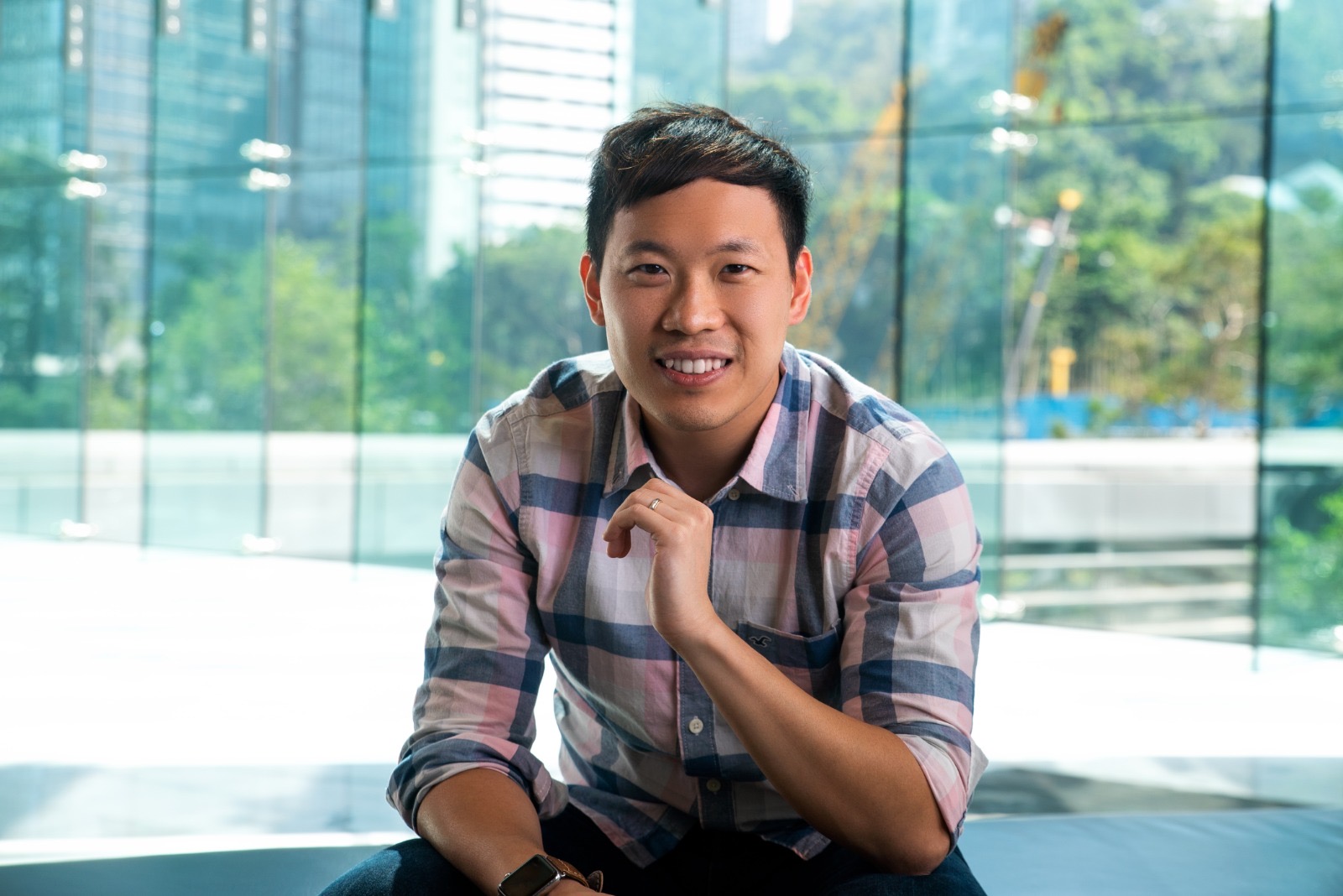
WonderMaple Strategy is a specialist education marketing agency. We work only with schools, colleges, learning centres, and EdTech companies, which means we understand academic calendars, parent decision journeys, and how families really choose schools. Our founder personally recruited more than 2,500 students earlier in his career, and we bring that source-market insight to every engagement across North America and Asia.
Shaping the best school digital experience in 2026 does not require chasing every trend. It requires positioning that sticks, a website that converts, visibility in both Google and AI, an enrolment journey that feels human, and the system to hold it all together. That is exactly what we build.
If you want to see where your school's digital experience is winning families and where it is quietly losing them, book a free recruitment audit at www.wondermaple.com. The audit costs nothing, and it usually gives your team the clearest picture it has ever had of what to fix first.
WonderMaple offers a free, no-commitment recruitment audit to help you see exactly where your school is losing inquiries and what to fix first.
Make your business unforgettable in every interaction.

.webp)
.webp)
.webp)
.webp)
.webp)
.webp)
.webp)
.webp)
.webp)
.webp)
.webp)
.webp)
.webp)
.webp)
.webp)
.webp)
.webp)
.webp)
.webp)
.webp)
.webp)

.png)
.png)




.webp)