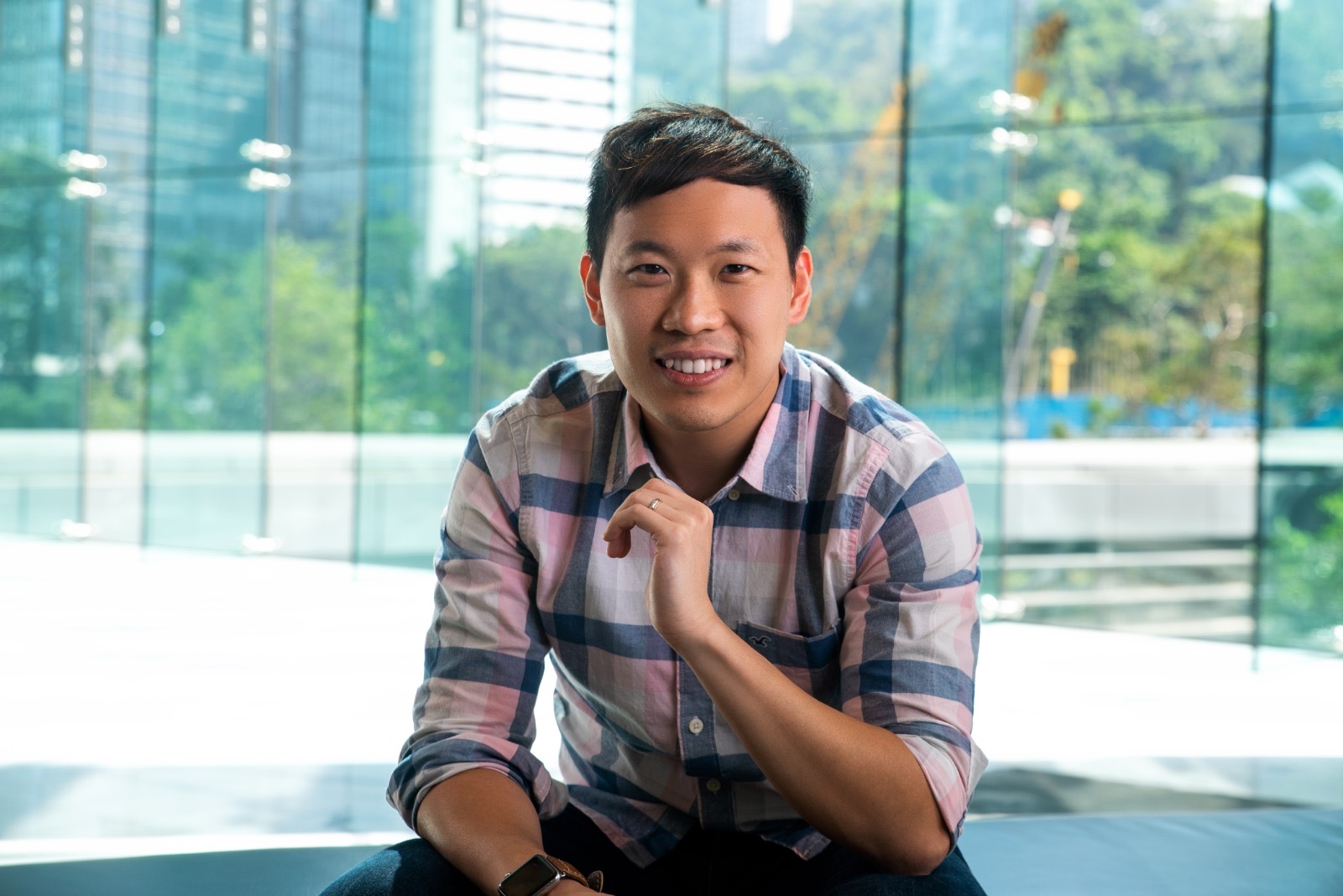

Parents and students do not only buy IB accreditation or STEM labs. They buy the future version of their child. In an era where graduate unemployment is rising and AI is eliminating entry-level jobs faster than any previous technology shift, the schools that win enrolments will be the ones whose messaging reflects that reality.
Here is a question worth sitting with for a moment.
When a parent or student opens your school's website for the first time, what do they find? A list of programmes. A description of facilities. A mention of accreditation. Perhaps an overview of extracurricular activities. All of it accurate. All of it, in some sense, impressive.
And none of it answering the question that is actually driving their decision.
The question every parent carries when they begin researching schools is "will this school prepare my child for what is coming?" And what is coming is one of the most significant economic disruptions in a generation. Parents researching schools nowadays are doing so against a backdrop that is impossible to ignore. Graduate unemployment is rising. Entry-level jobs are disappearing faster than new ones are being created. Artificial intelligence is accelerating both of those trends in ways that no previous generation of students has faced.
If your school's messaging is still built around features, you are answering a question that fewer and fewer parents are actually asking.
Suggested Reading: How Parents Choose Schools Online in 2026?
The data on young graduate employment is stark, and it is getting harder to ignore.
As of early 2025, the unemployment rate for recent college graduates in the United States aged 22 to 27 reached 5.8%*, its highest point in more than four years and well above the national average of 4.0%. The Federal Reserve Bank of New York reported that by the end of 2025, underemployment among recent graduates had climbed to 42.5%, meaning nearly half of young graduates were working in roles that did not require a degree at all.
Source: Federal Reserve Bank of New York — The Labor Market for Recent College Graduates
Workers aged 22 to 25 in the most AI-exposed occupations have seen a 13 percent decline in employment since 2022, according to research from Stanford University. In the technology sector alone, hiring of new graduates at 15 of the largest companies fell by more than 50 percent since 2019. Computer science graduates, who once represented one of the safest bets in the graduate job market, saw their unemployment rate nearly double between 2019 and 2025*.
Source: CNBC — AI Adoption Linked to 13% Decline in Jobs for Young U.S. Workers, Stanford Study Reveals | Dallas Fed — Young Workers’ Employment Drops in Occupations with High AI Exposure
The warnings from industry leaders are even more urgent. Anthropic CEO Dario Amodei has cautioned that AI could eliminate up to half of all entry-level white-collar jobs. Bill McDermott, CEO of ServiceNow, told CNBC that graduate unemployment could "easily go into the mid-30s in the next couple of years" as AI agents absorb the kind of structured, repeatable work that once served as the entry point for nearly every professional career.
Source: Fortune — ServiceNow CEO Says New College Graduate Unemployment Could Reach 30%
These are not niche concerns. They are front-page conversations that parents of school-age children are having at dinner tables, in WhatsApp groups, and in the research sessions that eventually lead them to your website. The question they are carrying is not whether their child will go to university. It is whether university, and the path that leads to it, will deliver the future they are investing in.
For decades, the school marketing playbook was built on a simple premise: list the best things about your school, and the right families will choose you. IB curriculum, AP programmes, robotics lab and university counselling. Outstanding graduation rates. That implied promise has weakened because the landscape they lead into has changed so dramatically that parents no longer trust the connection between impressive credentials and future security in the way they once did.
A parent who reads that your school offers AP courses and has a 98 percent university acceptance rate is no longer automatically reassured. Their next thought is "set for what, exactly?" The gap between completing a degree and building a sustainable career has never felt wider, and the features that used to bridge it in the parent's imagination are no longer doing that work automatically.
This is the core problem with features-first messaging in 2026. It describes the school accurately. It just does not speak to what parents are most afraid of.
Suggested Reading: Why High-Achieving Schools Struggle to Fill Seats?
When a family invests in private education spending tens of thousands of dollars over several years — they are not buying a curriculum. They are buying a version of their child's future. A specific, imagined version in which their child enters adulthood with the skills, the confidence, the adaptability, and the judgment to navigate whatever the economy throws at them.
In the AI era, that purchase is more emotionally loaded than it has ever been. For international families in particular, many of whom have made significant sacrifices to fund an overseas education for their child, the stakes are enormous. Education is not a commodity purchase. It is one of the largest and most consequential investments a family will ever make, and the return they expect is a child who is genuinely prepared.
The schools that win enrolments in this environment are not the ones with the longest list of features. They are the ones whose messaging makes a parent feel, clearly and convincingly, that this institution understands what the world their child is entering looks like, and has built something in direct response to it.
That is a fundamentally different conversation. And most schools are not having it yet.
Suggested Reading: Tips To Build Student Confidence & Convert Them
The most competitive schools globally are already rebuilding curriculum, repositioning their messaging, and redesigning the student experience around the skills that the next economy will actually demand.
The World Economic Forum identified AI literacy as a core competency in education as early as 2025, noting that nearly all employers across business sectors now expect employees to possess AI skills and are willing to pay a premium for candidates who do. Schools responding to this are not simply adding a coding elective. They are weaving algorithmic thinking, prompt engineering, data reasoning, and AI ethics into the fabric of how subjects are taught across every year level.
Source: World Economic Forum — The Future of Jobs Report 2025
At the same time, the skills that AI cannot replicate are receiving more deliberate attention, such as critical thinking under ambiguity, ethical judgment, cross-cultural communication, reative problem solving and collaborative leadership.
The University of California system, California State University, and institutions across Canada, the UK, and Southeast Asia have all begun restructuring how AI intersects with their curricula and career preparation programmes. Districts are creating new leadership roles specifically focused on AI readiness. Teacher training focused on AI pedagogy is rolling out at scale. The institutions that are getting ahead are the ones treating AI fluency not as a threat to manage but as a core outcome to design for.
Suggested Reading: Why LinkedIn Is Most Underused in HigherEd
The question for school marketers and admissions leaders is whether your messaging reflects any of this, or whether your website still reads like it was written in 2018.
Moving from features to outcomes does not mean abandoning accuracy or inventing a new identity for your school. It means reframing what you say about what you already do.
The difference is not subtle, but it is not complicated either.
"We offer an AP curriculum with a 97 percent university acceptance rate" is a feature statement. It describes what the school has.
"Our students leave here knowing how to think, adapt and compete in a world that looks nothing like the one their parents entered" is an outcome statement. It speaks to what changes for the child.
"Our STEM facilities include state-of-the-art robotics labs and coding suites" is a feature statement.
"We prepare students to work alongside AI tools in our STEM classes, and we focus onjudgment and creativity that automation cannot replicate" is an outcome statement.
The features can still be there, but the headline, the first impression, the emotional hook of every page on your website and every piece of admissions material you send, should be answering the question parents are actually carrying.
For international families making major financial and personal sacrifices to pursue a North American education, that reframe is not a marketing exercise. It is the difference between a school that understands their situation and one that simply has a brochure.
Suggested Reading: Why Clarity Is School's Biggest Advantage?
This is one of the most consistent gaps we find when we audit most of our clients' recruitment materials. Strong programmes. Genuine outcomes and messaging that buries both under a layer of institutional language that speaks to no one's fears or hopes.
WonderMaple Strategy works with private schools, international schools, virtual schools and higher education institutions to close the gap between what a school genuinely delivers and how powerfully it communicates that to prospective families. Our work covers the full recruitment picture from positioning and website messaging to admissions funnel optimisation, digital presence strategy, and the kind of outcome-led content that converts research into inquiry and inquiry into enrolment.
The schools that will win the next decade of student recruitment are the ones with the clearest, most credible answer to the question every parent is now asking: in a world reshaped by AI, what will actually change for my child if they come here?
If your school does not yet have a confident answer to that question baked into every part of how you recruit, that is exactly where we start. Book a free recruitment audit at www.wondermaple.com and find out where your current messaging is leaving families unconvinced.
WonderMaple offers a free, no-commitment recruitment audit to help you see exactly where your school is losing inquiries and what to fix first.
Make your business unforgettable in every interaction.


.webp)
.webp)
.webp)
.webp)
.webp)
.webp)
.webp)
.webp)
.webp)
.webp)
.webp)
.webp)
.webp)
.webp)
.webp)
.webp)
.webp)
.webp)
.webp)
.webp)
.webp)
.webp)
.png)



.png)




.webp)