

Yes, you read that right.
I placed 2,500 students into different institutions across North America in three years, mostly international students. It meant 18-hour workdays. It meant working on public holidays, Christmas, and New Year. It meant handling cases at every stage of the journey, from first inquiry to application, visa support and enrolment.
And here is the part many people find even harder to believe.
One hundred percent of those students came from our online channels. Zero of them came from sub agent. Many of them were referrals from other students we had already helped.
No mall booth. No education fair. No seminars in hotel. No large sales team. No giant agency behind the scenes.
Just digital strategy, consistency, brand trust, and a recruitment system that was built carefully over time.
Looking back now, I can say this clearly: student recruitment is not just about getting leads. It is about building an ecosystem that makes students and families trust you before they ever speak to you.
Suggested Reading: Why More Leads Won't Fix Enrolment in 2026
If there is one lesson I learned early, it is this: digital strategy is not a support function in recruitment.
It is the recruitment engine.
We built both YouTube and Facebook channels with over 10,000 subscribers/followers by consistently covering topics that parents and students genuinely cared about. Not what we wanted to say, but what they were already searching for:
School choices.
Top Courses.
Visa concerns.
Student life.
Career pathways.
Immigration questions.
Real-world guidance.
That content did more than attract views. It built familiarity.
By the time many families contacted us, they already knew who we were. They had watched the videos. They had followed the page for a long time. They had seen us answer the same concerns they were carrying themselves. The brand had already started doing the work before the first conversation even happened.
That is what many schools still underestimate. Branding is not just about looking professional. It is about becoming recognisable and trustworthy before the customer is ready to act.

Another big lesson was that lead generation only works when it respects the speed of the user.
Too many schools and agencies build long, exhausting inquiry forms that try to collect everything on day one. The result is predictable. Families lose patience. Forms get abandoned. Good leads disappear before the first contact.
I created a form that only asks questions that took only 1 minute to complete. What worked better for us was collecting as few questions as possible, while still capturing the essential ones.
We wanted just enough information to understand the student quickly. Their academic level. Preferred destination. Timeline. A few key indicators that would help us assess fit and prepare for the first conversation properly.
That small shift made a big difference. It sped up first response. It improved lead quality. It made follow-up more relevant. And it increased our chances of closing because we already understood much of the case before the first contact even happened.
Later I built another AI tool with structured questionnaires, this part can be even stronger. But the principle stays the same. Ask less, but ask smarter.
Suggested Reading: 5 Ways Data To Improve Your School Enrolment
This was one of the most underrated parts of the whole system.
We did not just recruit students. We built community among them.
When students knew they would have the chance to meet others going to the same school that were recruited through us, trust deepened immediately. Families felt more secure. Students felt less alone. The experience stopped feeling like a transaction and started feeling like a supported journey.
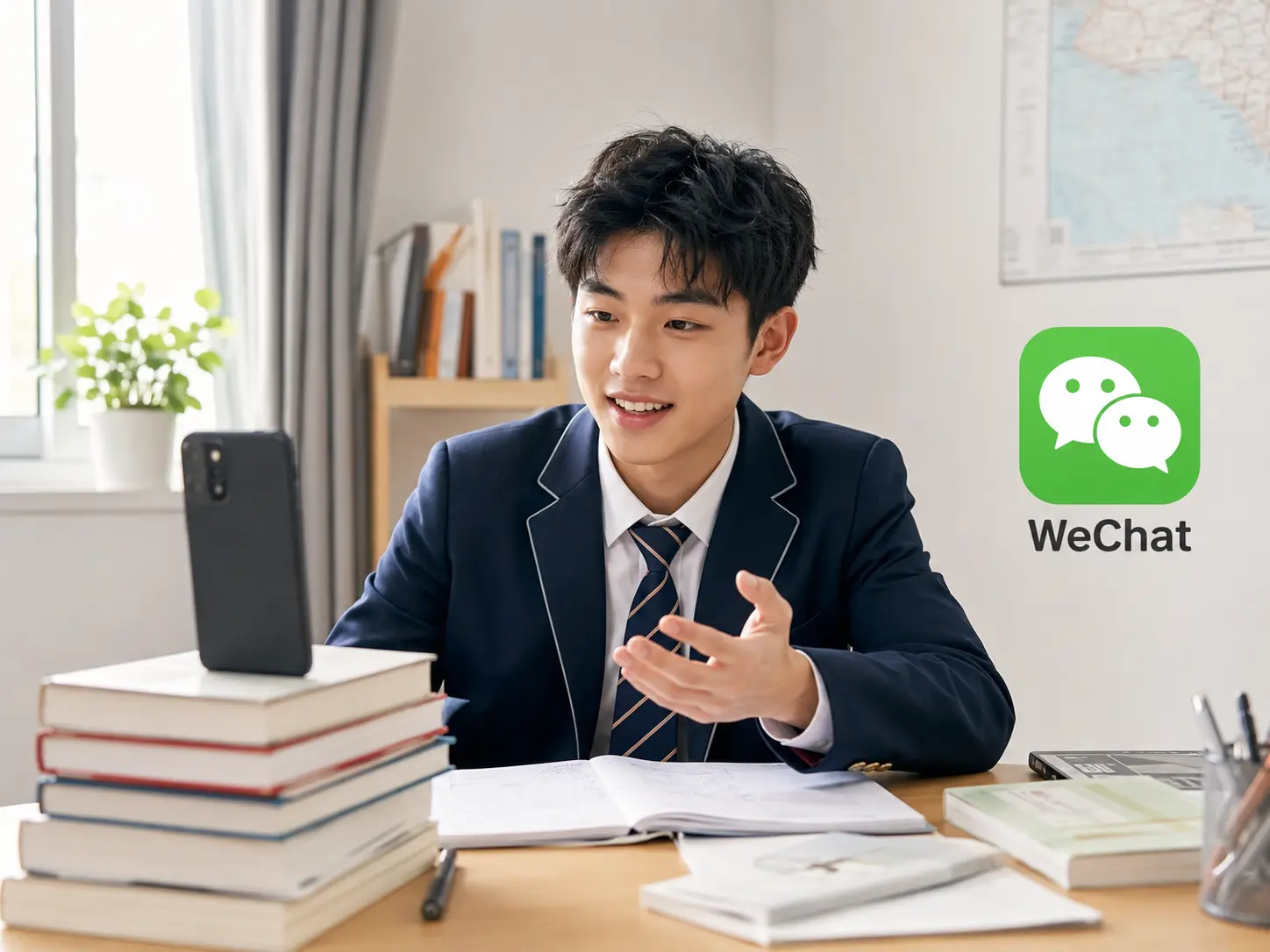
That community created practical benefits too. We created text groups where students shared experiences. They helped one another adjust. They exchanged tips. And future students could see that they were stepping into something larger than a one-off service.
In education, this matters more than people think. Families are not just buying access to a school. They are buying confidence in the transition, especially in a new country.
Suggested Reading: Asia Pathway Visa Requirement
Behind the brand and the content, there was another system quietly doing a huge amount of work: search and CRM.
We built a website that generated over tens of thousands of leads through strong SEO and keyword visibility on Google. It brought in tens of thousands of monthly visits, and it continues to do so. Over 10,000 people signed up to subscribe our blogs. But traffic alone was never the goal.
What mattered was what happened next.
Blogs helped us stay visible and stay relevant and always be on top of Google Search. They kept customers warm. They answered concerns before families had to ask them directly. They gave us more entry points into search. And they supported CRM strategies that helped nurture leads over time instead of letting them go cold after one visit.
This is where many institutions get stuck today. They think lead generation is just about running ads or posting on social media. Sustainable recruitment usually comes from building an ecosystem where content, search visibility, lead capture, and follow-up are all working together. Without CRM discipline, even strong leads can go nowhere.
Suggested Reading: A Step-by-Step SEO Guide for Private Schools
Recruitment is never only about marketing. It is also about what happens operationally after the lead comes in.
Over time, we built strong working relationships with immigration lawyers, which helped increase study permit approval outcomes and strengthen case confidence. We also built trusted relationships with school partners. Some colleges prioritised my students' applications and assigned designated officers to work on my cases because we had already sent hundreds of students to those schools and maintained a strong enrolment performance.
That kind of relationship does not happen overnight. It comes from volume, professionalism, trust and sending the right students to the right institutions consistently.
This is another lesson schools should pay attention to. Your external partnerships are part of your recruitment engine. The stronger and more coordinated they are, the easier it becomes to move students from inquiry to confirmed enrolment.
Suggested Reading: Why Agency Partners Matter More in AI World?
One thing I learned very clearly is that borrowed credibility matters, especially in education.
Being interviewed by local TV channels helped. Being invited to publish a book about studying overseas helped. Media exposure, third-party recognition, and public visibility all made the brand stronger. They gave families another reason to trust that we were not just another agent or service provider trying to sell something.
In a crowded market, credibility from outside your own platform travels far. People often discover you in one place, validate you in another and only then make contact.
That is why schools should never rely on one channel alone. Website, content, media, search, testimonials, partnerships, community and referrals all reinforce each other. Recruitment gets stronger when trust is built across multiple touchpoints, not just one.
If I had to reduce those three years into a few core lessons, it would be these.
There were no shortcuts in those three years. Just repeated execution, every day, across content, systems, follow-up, relationship-building and customer care.
Right now, I am taking a step back from active student recruitment, not because I no longer believe in the work. But because I have seen how many schools still struggle with the very systems that determine whether they grow or fall behind.
This week alone, more than 6 schools approached me about strategic planning. That tells you something important.
Schools know the environment has changed. Competition is stronger. Parents are more digital. Student decision-making is more complex. AI is changing discovery behaviour. And many schools are still trying to solve modern recruitment challenges with outdated websites, weak follow-up systems, unclear positioning, and disconnected admissions journeys.
That is where my focus is now. I am helping schools build next-generation strategies to recruit and retain more students. Not through theory, not through generic marketing advice, but through systems shaped by real recruitment experience, digital growth execution, and a deep understanding of what actually makes students and families move.
Suggested Reading: Our Story: Helping Schools Win in the AI Era
If your school wants to outperform competitors in this challenging and increasingly competitive environment, now is the time to rethink how your recruitment system is built.
The schools that win next will not simply be the ones with the biggest budget. They will be the ones with clearer positioning, stronger trust signals, smarter digital systems and a recruitment journey that actually reflects how students and families choose today.
If that is what you are trying to build, connect with me at WonderMaple Strategy. You can also book a free recruitment audit at www.wondermaple.com to get a clear picture of where your current system stands and where it can go.
WonderMaple offers a free, no-commitment recruitment audit to help you see exactly where your school is losing inquiries and what to fix first.
Make your business unforgettable in every interaction.


.webp)
.webp)
.webp)
.webp)
.webp)
.webp)
.webp)
.webp)
.webp)
.webp)
.webp)
.webp)
.webp)
.webp)
.webp)
.webp)
.webp)
.webp)
.webp)
.webp)
.webp)
.webp)
.png)




.png)





.webp)