
For a long time, the star rating on a school's Google Business Profile did a lot of quiet work. A parent would search "best private school near me" or "IB school in town," and those yellow stars would immediately start shaping their shortlist. A school sitting at 4.8 stars felt credible before a parent had even clicked through to the website. One sitting at 3.2 stars had a problem that no amount of good programming could easily fix.
As of April 30, 2025, that system no longer exists for K-12 schools. Google has removed all reviews and star ratings from Google Business Profiles for primary and secondary schools worldwide. Existing reviews have been wiped. The option to write a new review has been disabled. The numerical rating that so many schools spent years building, managing and worrying about is simply gone.
This is not a small algorithm tweak. It is a meaningful change to how parents research schools online, and it has real implications for how schools need to think about building trust with prospective families going forward.
Source: GreatSchools — Google Has Removed School Reviews: How to Keep Your School Visible Online
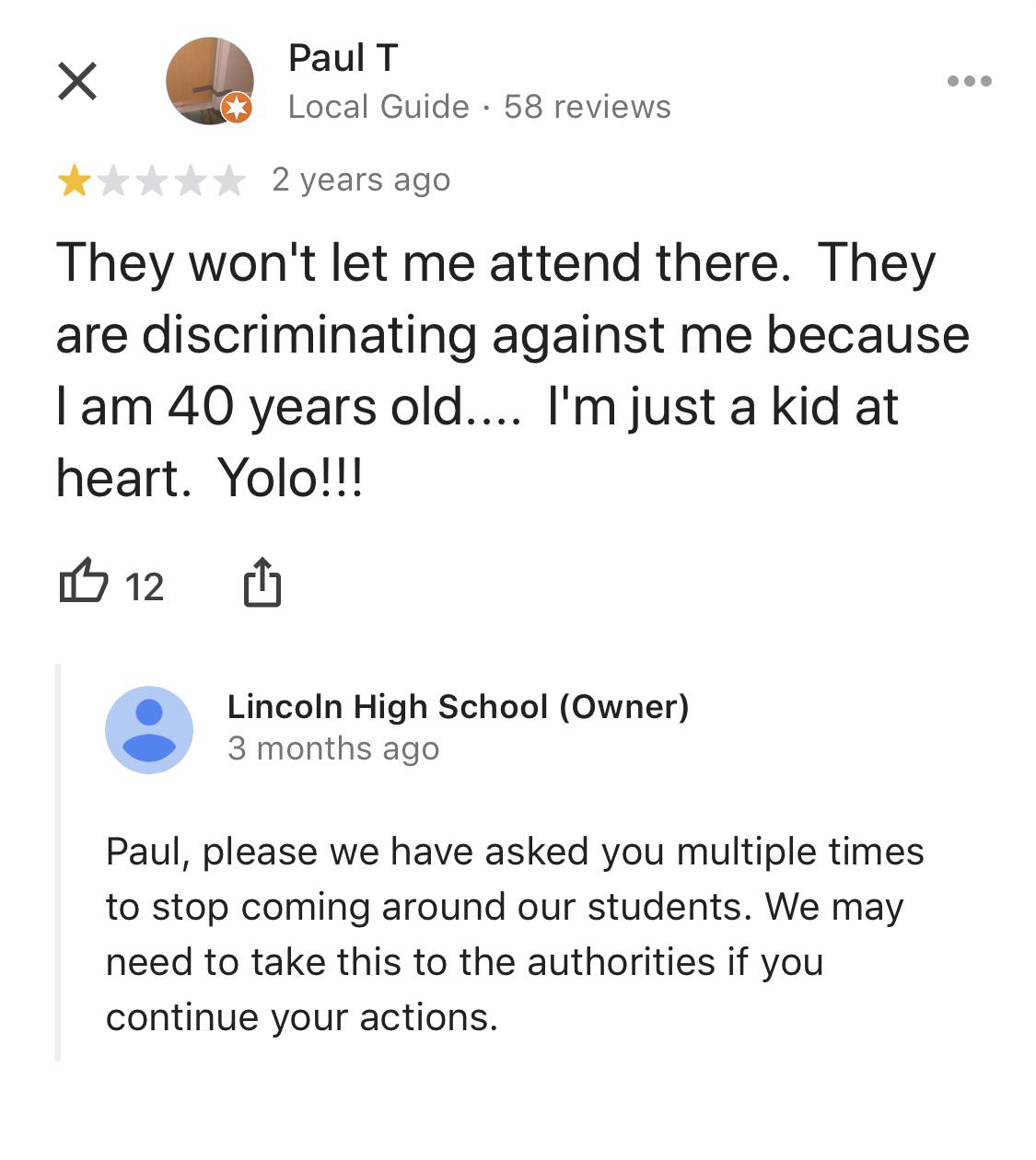
The decision makes sense when you think about what school reviews looked like in practice. Unlike a restaurant or a hotel, where reviews tend to reflect genuine customer experiences, school reviews were notoriously unreliable. Current students would post one-star ratings as a joke. Parents who had a bad experience with a single disciplinary decision would write reviews that bore no resemblance to the school's broader culture or quality. Former staff with grievances would weigh in. And because the reviews were public and anonymous, schools had very limited ability to respond meaningfully or provide context.
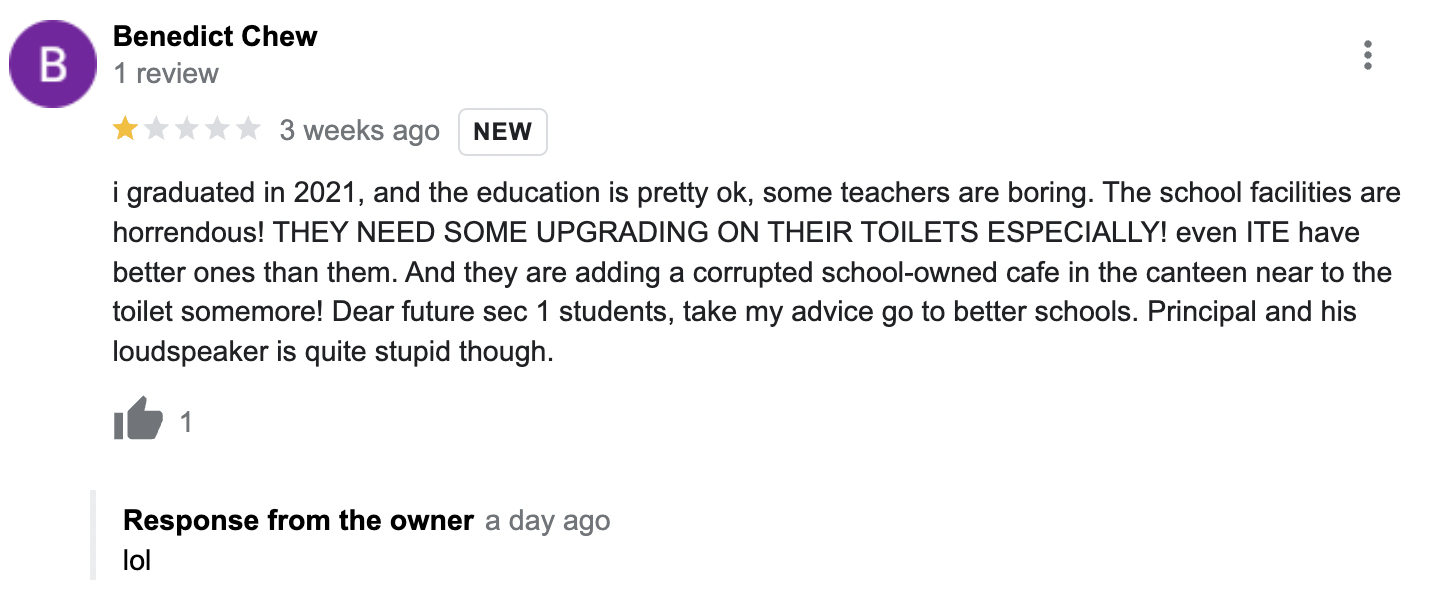
Google's conclusion, essentially, is that public reviews are not a reliable signal of educational quality. The responsibility for demonstrating that quality has now shifted back to the schools themselves.
It is worth noting that this change specifically targets K-12 schools, both public and private, including international and religious schools. It does not currently affect universities, tutoring centres, early childhood programmes, or language schools. Those institutions can still accumulate and display Google reviews as before.
The immediate practical effect is that schools can no longer rely on a passive third-party signal to do part of their credibility work. For schools that had strong ratings, that shortcut is gone. For schools that had weak or messy review profiles, the slate has been wiped clean, which is an opportunity if you move quickly.
Either way, the outcome is the same. Schools now need to own the job of building trust more deliberately. The parents who were previously reassured by a 4.7-star rating are still out there, still researching and still forming opinions from other parents. They are just going to be doing it differently now, and the schools that adapt fastest will be the ones that fill their enrolment pipelines more consistently.
Suggested Reading: How Parents Choose Schools Online in 2026?
One of the most practical responses to this change is to shift attention toward the school ranking and directory platforms that have existed alongside Google for years but were often overlooked while the star rating did the heavy lifting.
In the United States, Niche.com is probably the most well-known. It aggregates data from public sources alongside parent and student reviews, and it ranks schools across a wide range of categories including academics, teachers, diversity, and college preparation. A strong Niche profile, with recent and authentic reviews, now carries more relative weight than it did a year ago. Schools that have not claimed and actively managed their Niche listing should do so immediately.
GreatSchools.org is another major US platform, particularly influential with parents of younger children. It uses a combination of test score data and parent reviews to generate ratings, and it appears prominently in search results when parents are researching elementary and middle schools in a specific area. Keeping the profile current and encouraging satisfied families to leave reviews here is a straightforward win.
Source: GreatSchools — Google Has Removed School Reviews: How to Keep Your School Visible Online
For private and independent schools, PrivateSchoolReview.com and BoardingSchoolReview.com serve a more specific audience but one that is highly motivated and actively comparing options. Families searching these platforms are often further along in their decision-making process, which makes a well-maintained profile especially valuable.
In Canada, the Fraser Institute publishes annual school rankings based on academic performance data, and these are widely cited by parents comparing schools in British Columbia, Ontario, and Alberta. Schools that perform well in the Fraser rankings should be prominently featuring that recognition in their communications. Maclean's also covers school and university rankings with a Canadian readership in mind.
For international and IB schools recruiting globally, accreditation and membership listings through bodies like CIS (Council of International Schools) and the IB World Schools directory serve a similar function. Families searching for internationally accredited programmes treat these listings as a form of institutional endorsement, and being visible within them matters.
The broader principle is this: Google reviews were one signal among many, and now that signal is gone for K-12 schools. But the ecosystem of platforms where parents research, compare, and validate schools is still very much active. Spreading your school's presence and reputation management effort across several of these platforms is a more resilient strategy than any single channel ever was.
Suggested Reading: Why AI Has Formed an Opinion About Your School
Beyond third-party platforms, the most durable response to this change is investing in what your school directly controls. Google reviews were always borrowed space. The platform owned the data, set the rules, and as April 2025 demonstrated, could remove everything overnight. The content and stories that live on your own website are yours permanently.
A website that functions as a genuine trust-building tool looks quite different from one that functions as a brochure. It features real, named testimonials from current and recent families, ideally with photos and specific detail about what their child's experience has been. It shows where graduates have gone, what they have achieved and what parents say about the transition out of the school. It answers the specific questions that prospective families carry when they start their research, directly and without making them dig.
Video works particularly well in this context. A 30-second clip of a parent speaking naturally about their experience carries more weight than almost any written testimonial, because it is harder to fake and easier to connect with emotionally. Schools that invest in even a small library of short parent and student videos are building a trust asset that will outlast any platform change.
Suggested Reading: Why Peer-Generated Content Is the Most Trusted Voice
Open day registration flows, downloadable guides for prospective families and email nurture sequences that keep interested parents engaged over time all belong in the same category. These are assets that sit on your infrastructure, serve your audience and compound in value the longer they exist.
If you have not already, claim and fully complete your profiles on Niche, GreatSchools, and whichever other ranking platforms are most relevant to your school type and geography. Ask satisfied current families to leave reviews on those platforms while the habit of reviewing is still fresh. Add at least two or three substantive parent or student testimonials to your website homepage. And take a clear-eyed look at whether your website actually answers the questions a first-time parent would arrive with.
The schools that treat this moment as a wake-up call rather than just an inconvenience will come out ahead. The trust infrastructure that Google reviews provided was always more fragile than it looked. Building something more durable, across multiple platforms and firmly rooted in your own content, is a better position to be in.
Suggested Reading: A Step-by-Step SEO Guide for Private Schools
WonderMaple Strategy works with K-12 schools, international schools and private colleges to audit the full parent research journey and identify exactly where prospective families are losing confidence before they ever make contact. If you want a clear picture of where your school's trust-building infrastructure stands right now, and what to prioritise first, you can book a free recruitment audit at our website: www.wondermaple.com.
The families you want are still out there, still searching, still making decisions. The question is just whether what they find gives them enough reason to choose your school over the one down the road.
WonderMaple offers a free, no-commitment recruitment audit to help you see exactly where your school is losing inquiries and what to fix first.
Make your business unforgettable in every interaction.


.webp)
.webp)
.webp)
.webp)
.webp)
.webp)
.webp)
.webp)
.webp)
.webp)
.webp)
.webp)
.webp)
.webp)
.webp)
.webp)
.webp)
.webp)
.webp)
.webp)
.webp)
.webp)

.png)




.png)





.webp)