
.webp)
If you searched for your own school on ChatGPT right now, would it appear? Would it describe your programmes accurately? Would it even mention you at all? For many private and independent schools, the answer is no, and that gap is growing wider every term.
A new discipline is changing how schools need to think about digital visibility. It is called Generative Engine Optimisation, or GEO, and it may be the most important shift in school marketing since Google first indexed websites. This guide explains what GEO is, why it matters for your school, and what you can start doing about it today.
Generative Engine Optimisation (GEO) is the practice of structuring your website content so that AI-powered platforms, such as ChatGPT, Google AI Overviews, Perplexity, Gemini, and Meta AI, cite your school when students and parents ask questions about schools, programmes, or admissions.
Unlike traditional SEO, which earns you a position on a search results page, GEO earns you a mention inside the AI's generated answer. This distinction matters because students no longer always click through to websites. They read the AI's response and begin forming opinions about which schools to consider — all without visiting a single school website.
Research from a joint study by Princeton University, Georgia Tech, and IIT Delhi confirmed that applying structured GEO methods can lift a school's visibility in AI-generated answers by up to 40%. For schools investing in digital presence, this is not a future consideration. It is a present-day urgency.
Source: Princeton, Georgia Tech and IIT Delhi — Generative Engine Optimization (GEO)
Suggested Reading: Why AI Has Formed an Opinion About Your School
Around 60% of Google searches now end without the user clicking on any website at all. Google's own AI Overviews, featured snippets, and knowledge panels answer the question directly on the search results page, and the student moves on without ever visiting your site.
This shift is not gradual. Since the widespread rollout of AI-powered search features in 2024, education websites across multiple markets have reported significant declines in organic traffic. What was once a reliable stream of inbound visitors from search now passes through an AI filter, and most school websites are not prepared for how that filter works.
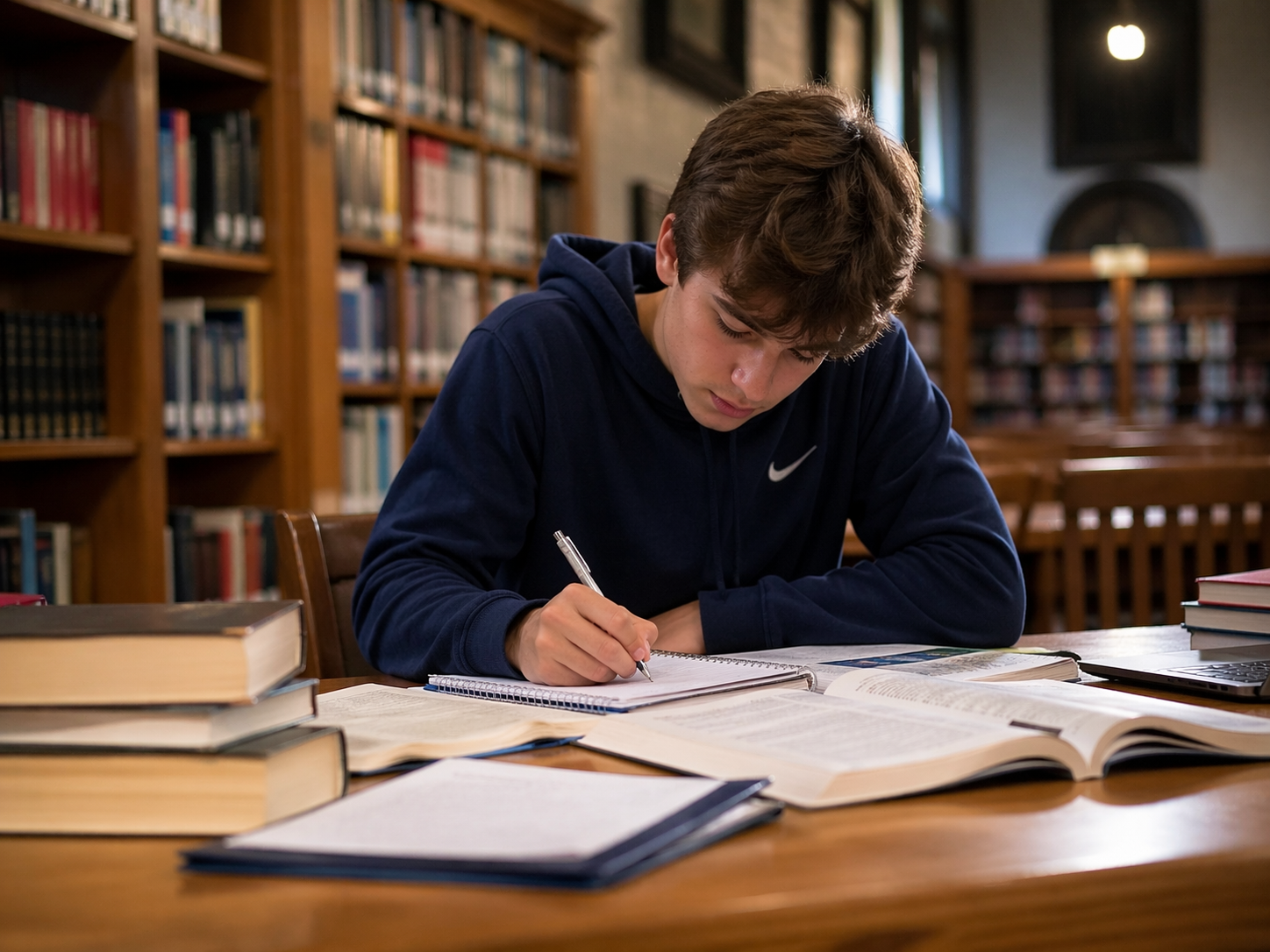
Meanwhile, student behaviour is changing at a pace that is difficult to overstate. Research found that 37% of students now use AI tools specifically to gather information about schools in their consideration set. The share of college-bound students using generative AI in their school search rose to 46% by late 2025, up from just 26% in early 2025. That is near-doubling in under twelve months. At WonderMaple, we are already seeing this reflected in how prospective families discover our clients: fewer arriving through organic search, more arriving through AI-assisted pathways that leave no trace in standard analytics.
Source: Ekamoira — 60% of Searches Get Zero Clicks: How to Win in 2026
AI models like ChatGPT and Perplexity generate answers by drawing on the text they have been trained on and the web pages they can access in real time. Schools that are described frequently, clearly, and in specific language, and that are backed by credible third-party references, are far more likely to be included in AI responses.
Several factors influence whether your school appears. The first is how clearly and specifically your website describes your programmes, outcomes, and community. Vague language, such as "nurturing environment" or "world-class education", is nearly useless to an AI model trying to match your school to a specific student query. The second factor is whether other reputable sources, including directories, review platforms, and media coverage, mention your school and link back to your website. Each of those references acts as a credibility signal for the AI. The third factor is the technical structure of your pages, including schema markup, which helps AI systems understand exactly what type of institution you are and what you offer.
Schools that combine all three — clear content, third-party citations, and technical structure — tend to appear in AI answers consistently. Schools that rely on design alone, or on outdated content, tend to be invisible in AI search entirely.
Source: Elliance — Higher Education Generative Engine Optimization for Colleges and Universities
Suggested Reading: The End of Google Reviews for Schools
Most school websites were built to impress human visitors, not to be understood by AI systems. The result is that content which looks beautiful on screen often performs poorly when an AI model tries to interpret and cite it.
The most common problems we find when auditing school websites include the following. Vague programme descriptions. A page that says "our boarding school offers a challenging academic programme" gives an AI model very little to work with. A page that says "our Grade 10 to 12 IB Diploma programme in Victoria, BC, has a 97% graduation rate and a 91% first-choice university acceptance rate" gives the AI exactly what it needs to cite you accurately in a comparison query.
No FAQ content. AI Overviews draw heavily from question-and-answer formatted content. A school that has no FAQ pages, or whose FAQ answers are brief and generic, is missing one of the most reliable ways to appear in AI-generated summaries for admissions queries.
Outdated pages. AI systems can reference old web pages that a prospective student would never find through a human search. If your tuition page shows 2022 figures, or your boarding capacity page references programmes that no longer exist, an AI will still cite that information. A family may make an enquiry decision based on it.
No schema markup. Adding structured data to your website, specifically EducationalOrganization schema, tells AI systems explicitly what type of institution you are, where you are located, and what programmes you offer. Most school websites have no schema in place at all.
Suggested Reading: Why Virtual Schools Are Invisible in the AI Era?
Before you can improve your AI visibility, you need to know where you currently stand. There are six questions worth testing today, and you can answer all of them by simply opening ChatGPT, Perplexity, or Google AI Overviews and typing in a search.
1. Does your school appear when students ask general questions? Try prompts such as "best private schools in [your city]" or "top boarding schools for international students in [your country]". Note whether your school is mentioned and whether the description is accurate.
2. Does your school appear when compared to competitors? Ask the AI to compare your school to one or two direct competitors. This reveals whether AI platforms have enough information about you to make a meaningful comparison, and whether the comparison is favourable.
3. What does the AI say about your school specifically? Type your school's name directly and ask the AI to describe it. Read the result carefully. Is the information accurate? Is it outdated? Is it missing your strongest programme or credential? This gap is your content priority list.
4. Can the AI understand your website? Paste your homepage URL into Perplexity or ChatGPT and ask it to summarise what your school offers. If the summary is vague or generic, your content is not specific enough to be cited accurately.
5. Which sources does the AI cite when it mentions your competitors? Understanding where AI models are pulling competitor information from, such as school directories, press coverage, or review platforms, shows you exactly where you need a stronger presence.
6. Is your SEO foundation solid enough to support GEO? AI models draw heavily from sources that already rank well in traditional search. A strong technical SEO foundation is not separate from your GEO strategy. It is the platform your GEO strategy runs on.
.webp)
Improving your AI search visibility does not require rebuilding your website from scratch. The most effective changes are targeted rewrites of existing content, combined with a few structural additions that AI models respond to immediately.
Rewrite programme pages for specificity. Every academic programme, boarding option or co-curricular offering needs a dedicated page that clearly states what it is, who it is for, what outcomes it delivers, and how it differs from alternatives. Specificity is the currency of AI search. Generic content earns no citations.
Add FAQ sections to key pages. The admissions page, tuition page, boarding life page, and about page should each include a short FAQ section addressing the most common questions prospective families ask. Write these in plain, conversational language that mirrors how a parent would type a question into ChatGPT. Think of each FAQ entry as a small, self-contained answer that an AI could lift verbatim.
Build third-party citations. AI models trust sources that other credible sources trust. This means actively building your profile on school directories, earning coverage in education publications, gathering verified reviews on Google and Niche, and pursuing listings in relevant rankings. Each of these becomes a reference chain that AI models follow when constructing answers about schools in your category.
Add schema markup. Work with your web developer or reach out to WonderMaple, to implement EducationalOrganization structured data on your homepage and key programme pages. This is a one-time technical addition that significantly improves how accurately AI models describe your school.
Update your content regularly. AI systems can surface stale pages. A quarterly content audit to refresh tuition figures, enrolment deadlines, staff biographies, and programme details keeps the information AI platforms cite about you current and credible.
Suggested Reading: How Do Schools Choose a Website Platform in 2026
GEO does not replace SEO. It builds on top of it. Schools with strong traditional SEO foundations are significantly better positioned to benefit from GEO strategies because AI models tend to cite sources that already rank well in organic search.
At WonderMaple, we consistently see that the schools with the clearest AI presence are the same schools that have invested in content quality, backlink profiles and page speed over time. The technical and content work that earns you a Google Page 1 ranking also makes you a more credible source for AI platforms to cite.
This means that if your school website has thin content, slow load times, broken links, or no backlinks, GEO work alone will not compensate for those gaps. The foundation has to be right first. Fortunately, fixing those SEO foundations also improves your AI visibility. The two strategies reinforce each other at every level, and addressing them together is the most efficient path forward.
Suggested Reading: A Step-by-Step SEO Guide for Private Schools
Our SEO and AI Search Visibility service is designed to address both layers simultaneously, so schools are not choosing between traditional search and AI search. They are building a presence in both at once.
Run through this self-assessment to identify where your school's AI visibility work should begin.
If you answered "no" or "not sure" to three or more of these questions, your school has a meaningful GEO gap. Families searching for schools like yours may not be finding you in the places where they are increasingly looking first.
At WonderMaple, our SEO and AI Search Visibility service helps independent and private schools close that gap systematically. We audit what AI platforms currently say about your school, identify the content and technical changes that will have the most impact and implement them in a way that works for both AI and traditional search at the same time.
If you are ready to find out where your school stands, book a free discovery call with our team. We will run a live AI visibility check with you on the call and show you exactly what prospective families are seeing — and not seeing — when they search for a school like yours.
WonderMaple offers a free, no-commitment recruitment audit to help you see exactly where your school is losing inquiries and what to fix first.
Make your business unforgettable in every interaction.


.webp)
.webp)
.webp)
.webp)
.webp)
.webp)
.webp)
.webp)
.webp)
.webp)
.webp)
.webp)
.webp)
.webp)
.webp)
.webp)
.webp)
.webp)
.webp)
.webp)
.webp)

.png)


.png)







.webp)