
.webp)
A note before this case study: the profile below is a composite built from patterns we have seen repeatedly across the private school marketing audits we run, not a description of any single institution. We are sharing it because the combination of issues it describes is common enough, and damaging enough, that most independent schools reading this will recognise at least one or two of their own gaps in it.
The school in this profile had a genuinely strong story to tell. It positioned itself around AI literacy and STEM education, the kind of differentiated academic focus that should attract exactly the parents willing to pay private school tuition for an alternative to the standard curriculum. On paper, that is a strong market position. Online, almost none of it came through.
A strong programme fails to convert online when the digital presence around it, the website, the search visibility, the social channels, and the photography, does not reflect the quality of the education being described. Families cannot evaluate a curriculum directly. They evaluate it through proxies, and when those proxies look neglected, the underlying programme gets discounted along with them.
This is the pattern that showed up across every channel we reviewed for this school. The academic positioning was sound. The execution around it was not, and the gap between the two was large enough to actively work against enrolment rather than simply fail to help it.
The school was invisible because its website carried a domain rating in the single digits to low teens, well below the range where a small organisation typically starts to compete in local search, and its Google Business Profile had lost its reviews entirely, removing one of the strongest local ranking signals available to any physical school.
For a physical campus operating in a competitive, high-density market, this combination is close to the worst case. Google Business Profile signals carry significant weight in local pack rankings, and listings with complete, review-backed profiles receive substantially more clicks than those without. With its reviews gone and its domain authority underdeveloped, the school had effectively opted out of local search, despite being a real, established, bricks-and-mortar institution that should have had a natural home field advantage over newer or fully virtual competitors.
The same underdevelopment carried over into answer engines. We have written before about how thin, poorly structured content makes a school invisible in the AI era, and the same mechanics applied here. A school promoting itself as AI-forward was, ironically, one of the harder schools in its category for an AI assistant to find or describe accurately. Our guidance on getting a school found in AI search and on SEO for private school websites covers the baseline most schools need before AEO becomes possible at all, and this school had not yet reached that baseline.
Suggested Reading: Why Virtual Schools Are Invisible in the AI Era
Suggested Reading: How to Get Your School Found in AI Search?
Suggested Reading: A Step-by-Step SEO Guide for Private Schools
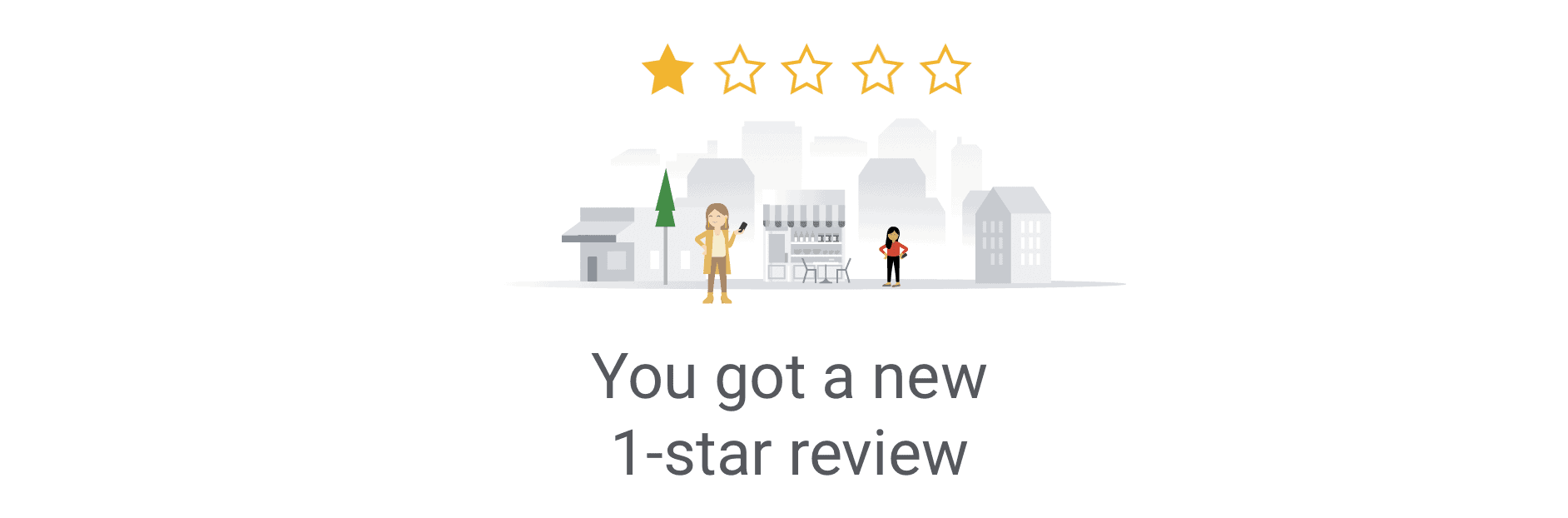
The school's Google reviews had been removed entirely, leaving prospective families with no third-party social proof at the exact moment in their research when they are most likely to be looking for it. The vast majority of consumers now read reviews before visiting a local business in person, and a school is no exception to that behaviour.
We covered this exact risk in our piece on the end of Google reviews for K-12 schools. Whether reviews disappear through a platform policy change, a flagging issue, or a deliberate removal request, the effect on a family's research journey is the same: a credibility gap opens at the worst possible moment, right before they decide whether to book a tour.
Suggested Reading: The End of Google Reviews for Schools
An AI-generated avatar undermines trust because prospective families can usually tell, and once they suspect a video is synthetic, their confidence in the message and the messenger both drop. This school's leadership had used an AI avatar of themselves to present admissions content on social media, which is precisely the kind of content where authenticity matters most.
The research on this is increasingly clear. A large majority of consumers report being able to spot AI-generated video, and a meaningful share say that detecting it lowers their perception of the brand behind it. Separately, the majority of consumers say they trust videos featuring real people more than AI-generated content, full stop.
Source: Business Wire — 83% of Consumers Can Spot AI Videos, Animoto Report
For an admissions audience specifically, this matters even more than it would for a typical consumer brand. Families are not just evaluating a product. They are deciding whether to trust an institution with their child for several formative years, and that decision runs almost entirely on perceived authenticity. We have written about why peer-generated content earns more trust than institutional messaging in admissions specifically because it feels unscripted. A synthetic avatar of a real leader sits at the opposite end of that spectrum, and it reads that way to families even when the institution does not intend it to.
Suggested Reading: Why Peer-Generated Content Is Most Trusted Voice
.webp)
Inconsistent branding erodes reach because social platforms and audiences both reward recognisability, and an account that changes its visual identity, tone, and posting rhythm repeatedly over time gives algorithms and followers less reason to keep engaging with it. This school's Instagram presence showed several distinct design eras with no unifying strategy connecting them, and its engagement had declined accordingly.
Visual inconsistency. Templates, colour palettes, and caption styles changed multiple times without a clear reason tied to a campaign or rebrand, making the feed feel disjointed to anyone scrolling through it.
No content pillars. Posts moved between academics, events, and general school life without any consistent themes a follower could come to expect or look forward to.
Declining cadence. Posting frequency dropped over time, which compounds the reach problem further on platforms that already favour consistently active accounts.
We go into the specific platform strategies that reverse this pattern in our piece on how schools should use Instagram in 2026. The short version is that algorithmic reach increasingly rewards a recognisable, consistent identity over sporadic, disconnected posting, and this school's account had drifted in the opposite direction for long enough that the decline had become structural rather than incidental.
Suggested Reading: 5 Top Instagram Schools Strategies in 2026
Outdated testimonials fail to convince because the parents most willing to pay private school tuition are typically the most outcome-focused, and a quote from several years ago signals that the school has not produced a more recent success worth featuring, whether or not that is actually true.
This school's published testimonials predated its current AI and STEM positioning entirely, which created an odd disconnect: a forward-looking academic pitch sitting next to social proof that read as several years old. For families specifically comparing private alternatives because they want measurable outcomes, a stale testimonial section does the opposite of reassure. We covered why specificity and recency in messaging matters so much for this exact audience in why clarity is now a school's biggest competitive advantage. Testimonials are one of the clearest places where that clarity either shows up or quietly disappears.
Suggested Reading: Why Clarity Is School's Biggest Advantage?
The clash happened because the school's chosen differentiator, AI literacy and STEM education, is exactly the kind of positioning that technically literate parents will quietly verify before booking a tour, and the verification trail they found told a different story than the pitch did.
A parent comparing private schools specifically for an AI and STEM focus is, almost by definition, more digitally literate than average. That parent is more likely to check a school's domain authority indirectly through search rank, notice a missing review history, spot an obviously synthetic video, and register a blurry photo gallery as a sign of inattention. None of those things are subtle to this particular audience. A school asking families to trust its judgement on emerging technology while visibly mishandling its own digital presence creates a credibility gap that is difficult to talk your way out of after the fact.
Blurred photography undercuts trust because image quality functions as a proxy for institutional care, and a family that notices pixelated or out-of-focus photos tends to generalise that impression to the school itself, regardless of how good the actual campus or programme is.
The school's website photography included visibly blurred and low-resolution images throughout its admissions pages, the exact pages a family is most likely to study closely before booking a visit. Research on image quality consistently finds that poor photography lowers perceived credibility and measurably increases bounce rates, and that effect holds across categories well beyond retail. A campus tour photo gallery is, in many ways, a school's product page, and it was being treated with far less care than the academic programme it was meant to represent. We touch on why the broader platform a school builds its website on matters for this exact reason.
Suggested Reading: How Do Schools Choose a Website Platform in 2026
Source: Proxyle — The Impact of Low-Quality Imagery on Brand Perception
Use this checklist to see how many of these patterns apply to your own school:
If more than one or two of these feel uncomfortably familiar, the issue is rarely the school itself. It is usually the gap between what the school actually offers and what its digital presence is currently able to communicate. That gap is exactly what we help independent schools close, and it tends to be more straightforward to fix than school leaders expect once it has been properly diagnosed.
If this profile sounds closer to home than you would like, we offer a free digital presence audit for schools that want a clear, specific picture of where their website, search visibility, and social media currently stand. Get in touch for your audit, or browse more guidance in our Learning Resources.
WonderMaple offers a free, no-commitment recruitment audit to help you see exactly where your school is losing inquiries and what to fix first.
Make your business unforgettable in every interaction.

.webp)
.webp)
.webp)
.webp)
.webp)
.webp)
.webp)
.webp)
.webp)
.webp)
.webp)
.webp)
.webp)
.webp)
.webp)
.webp)
.webp)
.webp)
.webp)
.webp)
.webp)
.png)

.png)




.webp)